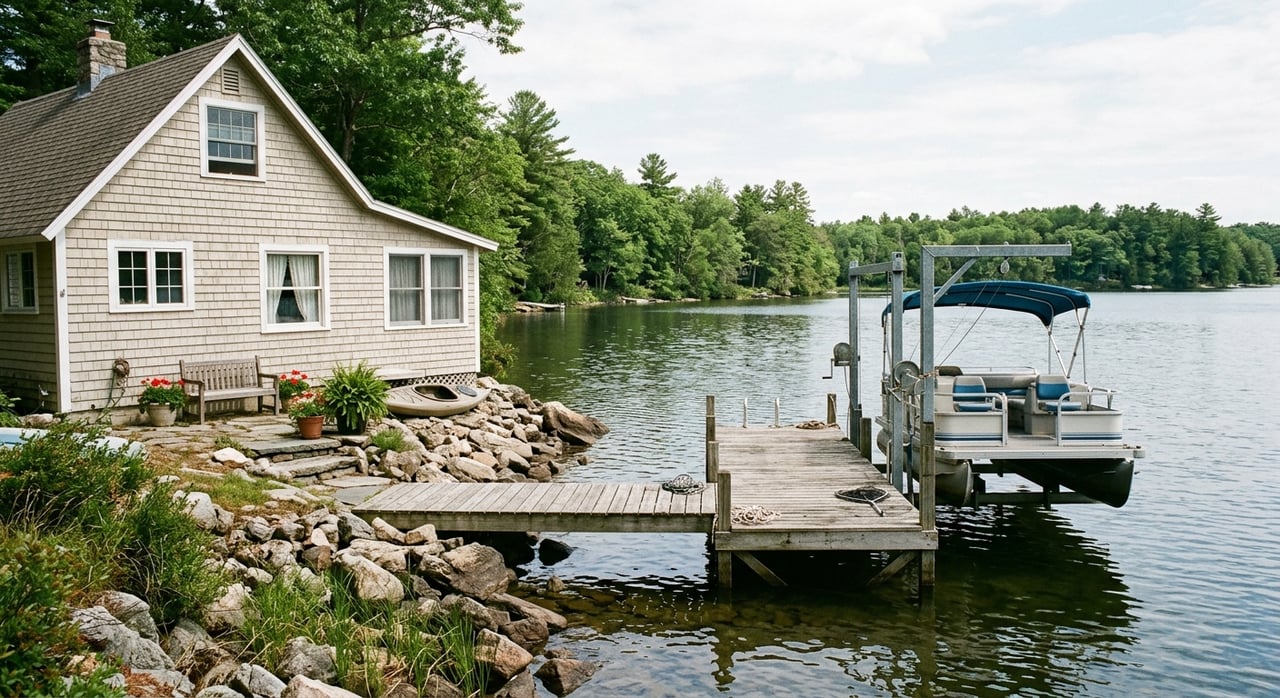
Your Guide to Buying a Waterfront Home in Schofield
June 11, 2026
June 11, 2026
Thinking about buying on Lake Wausau? Waterfront property can be exciting, but it also comes with questions you do not always face with a typical home purchase. If you are looking around Schofield, you need more than a pretty view. You need to understand access, zoning, shoreline rules, and long-term upkeep so you can buy with confidence. Let’s dive in.
Lake Wausau is a large, active waterfront setting in the Schofield area. Wisconsin DNR classifies it as an 1,851-acre flowage with a maximum depth of 30 feet and a mean depth of 7 feet. That combination shapes how buyers should think about both recreation and property use.
This is not just a scenic backdrop. Lake Wausau supports boating, fishing, paddling, and other seasonal activity, with fish species that include musky, panfish, largemouth bass, smallmouth bass, northern pike, and walleye. The DNR also lists four boat landings and a local water-ski drop-off and pick-up area, which tells you right away that some shoreline areas may see more activity than others.
In and around Schofield, public access is part of everyday life on the water. Radtke Park offers stairs to the lake for fishing, and the Schofield Dam area includes boat landings, fishing areas, a kayak launch, and bathrooms. Marathon County also provides accessible canoe and kayak launches at Riverlife Park and DC Everest Park, though seasonal installation and removal can vary with ice and flooding.
Buying waterfront near Schofield is often about matching the property to how you want to use it. Some buyers want easy boat access. Others care more about a stable shoreline, a peaceful view, or simple access for kayaking and fishing. The right fit depends on the lot as much as the house.
Because Lake Wausau is a flowage, shoreline conditions can vary more than first-time waterfront buyers expect. A home may look perfect online, but the real questions are practical. Can you comfortably use the shoreline? Is there room for the kind of dock setup you want? How does that section of shoreline handle wake exposure, seasonal water conditions, and winter ice?
This is one reason waterfront shopping should be slower and more detailed than a standard home search. A good showing is not only about the kitchen and primary suite. It is also about walking the bank, looking at the water access, and understanding how the property functions in real life.
One of the biggest surprises for waterfront buyers is how much regulation can affect future plans. In Wisconsin, the shoreland zone generally reaches 1,000 feet from a lake or flowage and 300 feet from a river or stream, or to the landward side of the floodplain, whichever is greater. That means rules can affect a large area around the water, not just the edge of the shoreline.
Above the ordinary high-water mark, local governments regulate setbacks and development. Below that mark, the DNR regulates activities such as pier placement, shoreline erosion control, and dredging. If you are thinking ahead to adding a deck, moving a shed, replacing a pier, or improving the shoreline, these details matter.
State shoreland standards also require a 35-foot vegetation buffer and a 75-foot structure setback from the ordinary high-water mark, with limited exceptions. Those standards can influence where additions or other improvements may be allowed. If your plans depend on changing the property, make those questions part of your due diligence before you buy.
In Schofield, local approvals matter. The city has shoreland-wetland zoning and floodplain zoning, and it requires zoning approval before permits for change of use, expansion, new construction, sheds over 150 square feet, and fences. The city also uses Wausau for plan review and inspections, and permits must be issued before work starts.
For shoreline work in Schofield, permit conditions can include erosion control requirements near the ordinary high-water mark, on steeper slopes, and near property lines. The city also restricts heavy equipment on or below the waterline and limits spoil placement close to shore. If a property looks like it needs shoreline repair or cleanup, those rules should be part of the conversation.
Outside the city, Marathon County’s zoning division administers shoreland, floodplain, and private onsite wastewater treatment system ordinances county-wide, except where local town zoning changes the setup. If you are comparing properties in and around Schofield, do not assume every parcel follows the same review process.
Waterfront buyers should check floodplain status early. Wisconsin DNR’s floodplain management program is designed to protect life, health, and property and to discourage unwary buyers from stepping into avoidable risk. For you, that means flood-zone status can affect financing, insurance needs, and monthly carrying costs.
If a home is in a high-risk area and has a federally backed mortgage, flood insurance may be required. Even if that does not stop a purchase, it can change affordability over time. It is much better to understand that before you write an offer than after inspections are complete.
You should also confirm whether the property is on public sewer or a septic system. If a parcel is not on public sewer, sewer-versus-septic status can affect what the lot can support under shoreland rules. In Marathon County, septic and related zoning oversight are part of the local review process, so this is not a detail to leave until the end.
Many buyers picture waterfront ownership as mostly enjoying the view. In reality, shoreline care is part of the package. Wisconsin DNR encourages natural shoreline vegetation because buffers help protect water quality, fish and wildlife habitat, and scenic value.
That means shoreline areas are not usually meant to be cleared like a standard backyard. Clear-cutting between the ordinary high-water mark and 35 feet inland is generally limited. Most erosion-control projects also need permits, which can affect both cost and timing.
DNR notes that high water, windstorms, ice movement, and shoreline configuration can all contribute to erosion. On a showing, look closely at the bank. A lot with visible wear, steep grade changes, or signs of past movement may need more attention than a buyer expects.
For lighter upkeep, vegetation on exposed lakebed areas may be removed by hand in a 30-foot-wide access path to maintain pier and boat access. But once work becomes mechanized or involves bank armoring, permit review may be triggered. In short, shoreline maintenance is usually more regulated than routine yard work.
Lake Wausau has verified invasive-species records that include curly-leaf pondweed, Eurasian water-milfoil, rusty crayfish, Chinese mystery snail, banded mystery snail, and purple loosestrife. That does not mean every property has the same conditions, but it does mean waterfront ownership here comes with seasonal awareness.
DNR guidance emphasizes cleaning, draining, and drying boats and equipment to reduce the spread of invasive species. For buyers, that translates into practical ownership habits and possible upkeep costs for docks, lifts, and boats. It is a reminder that waterfront living is hands-on in ways a non-waterfront property is not.
Because Lake Wausau is a shallow-average-depth flowage with documented invasive species, it can be smart to view a property with shoreline usability in mind. If possible, pay attention to boat access, weed pressure, and how the waterfront functions in more than one condition or season. That kind of practical evaluation can help you avoid surprises later.
Waterfront homes often carry a premium, but value is highly specific to the property. Broad research shows waterfront premiums can be meaningful, yet those numbers are not Lake Wausau-specific and should not be treated as a pricing formula. What matters most here is how usable and manageable the waterfront is.
In the Schofield area, value questions usually come down to a few key features:
These factors shape both enjoyment and long-term cost. A home with a great view but limited shoreline function may fit one buyer perfectly, while another buyer may place more value on practical boat access or a more stable bank.
When you are touring waterfront property around Schofield and Lake Wausau, keep this checklist in mind:
That last point matters more than many buyers realize. The DNR advises boaters to check the posted sign at a public landing because local boating ordinances can be more restrictive than state law, and the sign at the landing is the reliable way to know whether a local ordinance is in effect.
Waterfront purchases ask more of you than a typical home search. You are not just evaluating square footage and finishes. You are also weighing shoreline rules, property usability, permit history, flood exposure, and future maintenance.
That is where local experience can make a real difference. When you have someone guiding you through the details, it becomes easier to spot red flags, ask better questions, and focus on the properties that truly fit your goals. Waterfront can be a wonderful investment in your lifestyle, but it works best when you go in with clear eyes.
If you are thinking about buying waterfront property around Schofield and Lake Wausau, working with a local expert can help you move forward with confidence. Reach out to Joleta Wesbrock for practical guidance, clear communication, and local insight every step of the way.
Stay up to date on the latest real estate trends.
I offer the highest level of knowledge, service and integrity. I care deeply about my clients and customers. Their real estate needs are my #1 priority and my goal is to exceed your expectations and be your realtor for life.